



The University of Göttingen is an internationally renowned research university. Founded in 1737 in the Age of Enlightenment, the University is committed to the values of social responsibility of science, democracy, tolerance and justice. It offers a comprehensive range of subjects across 13 faculties: in the natural sciences, humanities, social sciences and medicine. With about 28,000 students and more than 210 degree programmes, the University is one of the largest in Germany.
New press releases

Two kinds of subduction recorded in one rock
When two tectonic plates collide, one plate sinks below the other – a process known as “subduction”. An international research team led by Göttingen University has discovered a rock in Papua New Guinea that, four million years ago, travelled over 90 km down into a subduction zone. The rock records an unusual journey, with higher-than-expected temperature conditions at a depth of around 45 km. The results were published in Nature Geoscience.
more…
Faster, sharper, easier imaging with “self-blinking dyes”
Nanobodies are extremely small antibody fragments which bind to specific molecules. When labelled with dyes, they can be used as probes to enhance super-resolution microscopy. However, conventional blinking dyes often perform poorly when attached to nanobodies, limiting their practical advantages. An international research team led has now shown that the way to get round this is to use "self-blinking dyes".
more…
University of Göttingen: eleventh in Germany
The most recent World University Rankings by the Times Higher Education (THE) have placed the University of Göttingen 11th in Germany. In the global rankings, it is in 133rd place this year. The University performs very well in the area of research quality, scoring 85 out of a possible 100 points, as it did last year.
more…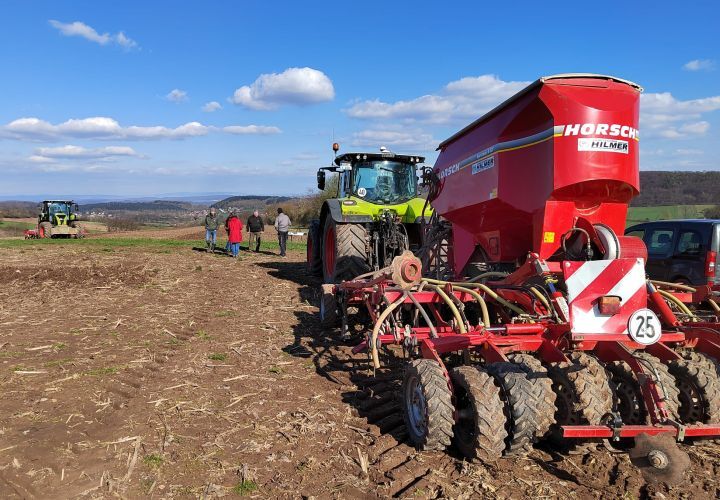
Climate-resilient agricultural landscapes in Lower Saxony
How can agricultural landscapes remain productive, preserve biodiversity and provide key ecosystem services, despite climate change? The new collaborative project “AgRe-Lab”, led by the University of Göttingen, is dedicated to addressing this question. The Lower Saxony Ministry of Science and Culture has funded the research for six years with 5.3 million euros from the “zukunft.niedersachsen” programme.
more…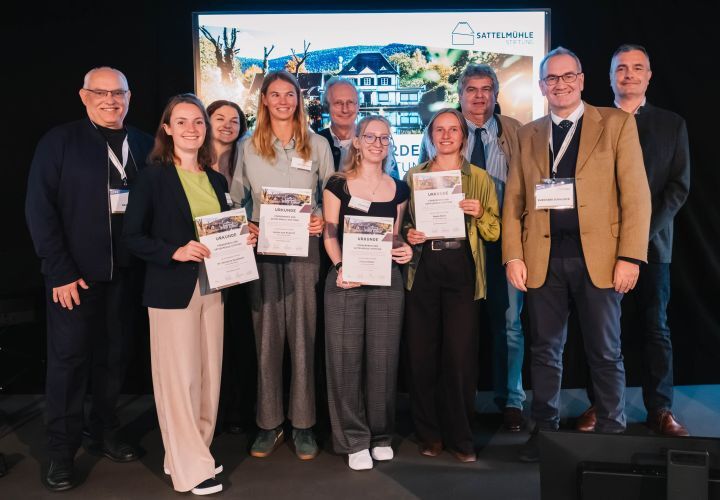
Forestry researchers receive awards
The Sattelmühle Foundation has recognised two dissertations in forest sciences at the University of Göttingen: Dr Christina Hackmann received the award for the “Best PhD Thesis”, whilst Leonie von Rudorff won the “Best Master’s thesis”. The prize for the winning PhD thesis is 12,000 euros and 6,000 euros was awarded for the winning Master’s thesis. The award ceremony took place at the Sattelmühle forestry estate in the Palatinate Forest.
more…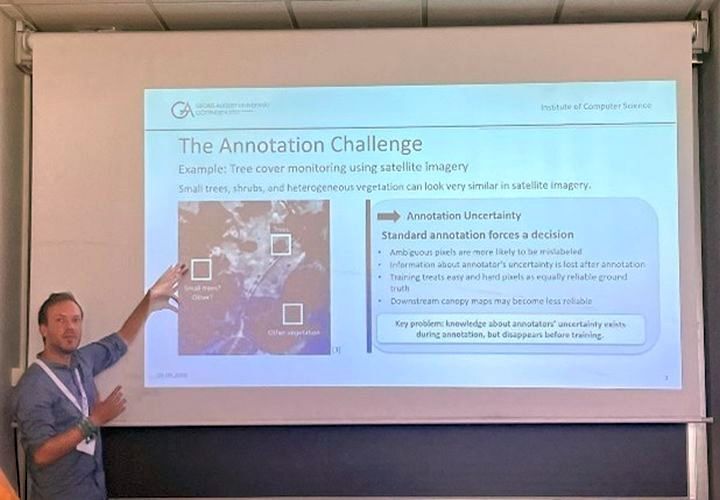
Accounting for uncertainty in AI-based tree cover monitoring
Researchers from the Institute of Computer Science and the Department of Economics at the University of Göttingen have received the Best Paper Award at the ACM International Conference on Information Technology for Social Good (GoodIT 2026). The award, the conference's sole Best Paper Award this year, recognizes their research on making AI-based tree cover monitoring from satellite imagery more reliable.
more…


Events
Lade Veranstaltungen…


